A Breezy Afternoon Outside: What to Bring and What to Leave
A breezy afternoon outside is more comfortable with one useful layer, a drink, and an easy stopping point, without packing for every possible turn.
The common mistake on a breezy afternoon outside is packing for every version of the weather at once: a heavy coat, spare clothes, extra food, and a bag that becomes the afternoon’s main activity. The better plan is smaller. Bring one layer you can wear or carry, a drink, and a clear way to shorten the outing if the wind stops being pleasant.
Imagine you have a free afternoon and a nearby riverside path in mind. The sky is bright, leaves are moving steadily, and the forecast suggests no major change. You do not need to solve the weather. You need to make a modest plan that still feels comfortable if the exposed stretch gets tiring.
What makes a breezy afternoon plan manageable?
Wind changes comfort unevenly. A sheltered street can feel mild, while a path beside open water or across a wide lawn can make the same clothes feel insufficient. That is why the useful question is not simply whether it is warm; it is whether your route offers places to pause, turn back, or take shelter.
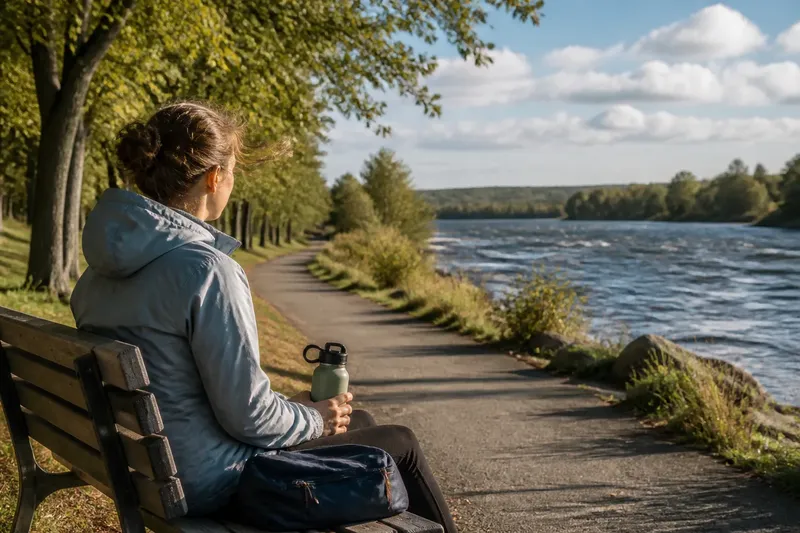
For this invented outing, you choose a route that passes a tree-lined section before reaching the river. A bench near the trees gives you a natural decision point. If the open path feels inviting, continue; if it feels too exposed, the afternoon can end there without turning into a failed expedition.
Which layer should you bring?
Choose one comfortable outer layer that blocks some wind and can be carried without fuss. A light windbreaker or a closely woven overshirt may suit a mild day; a warmer fleece or jacket may make more sense if the air is cool. The right choice depends on the conditions and on how easily you tend to feel chilled.
Wear a comfortable base layer underneath rather than treating the outer layer as a substitute for sensible clothing. A hood can help with gusts or light drizzle, but it may also make it harder to hear people and nearby traffic. If you prefer a cap, secure it well enough that you are not spending the walk watching it depart.
In the imagined situation, you take a windbreaker and wear a long-sleeved shirt. The path begins in shelter, so the jacket stays open. Near the river, the breeze feels sharper; you zip it up and keep walking at an easy pace. That small adjustment is more useful than carrying several layers you are unlikely to wear.
What belongs in the small bag?
Keep the load tied to the plan rather than to every possibility. A compact bag can hold:
- A water bottle that is comfortable to carry and easy to close.
- The chosen layer, if you would rather start without wearing it.
- A phone for checking the route, contacting someone, or changing plans.
- Keys and any personal essentials you need for the outing.
- A small cloth or tissue if it has a clear use for you.
A drink matters because walking, talking, or sitting outside can make you forget to pause. Water is a straightforward option; another familiar drink may suit you if it travels well. Keep the lid secure, especially if the bag will sit on a bench or be set down on grass.
For this case, you bring water in a bottle with a screw top and leave the larger tote at home. You can carry the bottle in one hand or tuck it away, and the bag stays light enough to forget about. The expected result is not some dramatic improvement; it is simply less fiddling while you decide whether to keep walking.
How can you make the outing easy to shorten?
Pick a stopping point before you leave. It could be a familiar bench, the edge of a small park, or the start of the exposed section. A stopping point gives the outing a shape without requiring you to complete a loop or reach a distant destination.
In the invented riverside plan, the tree-lined bench is the halfway decision. After a pause, you can continue to the water for a short look or take the sheltered path back. If gusts make conversation difficult, the route is uncomfortable, or you simply lose interest, returning is already part of the plan.
That flexibility is not a concession to poor planning. It is the point of choosing a nearby place for an ordinary afternoon. A short visit can still include fresh air, a change of scenery, and a proper pause; the walk does not need to earn its existence by becoming long.
What do people ask before heading out?
Is a light jacket enough for a breezy afternoon outside?
It may be, if the air feels comfortable and the jacket blocks enough wind for the places you plan to visit. If the route is exposed or you tend to get cold, choose a warmer layer or a more sheltered route instead.
Should I bring an umbrella?
Only if rain is a realistic part of the forecast and the umbrella would remain manageable in the wind. A gusty setting can make an umbrella awkward, so a hooded layer or a shorter, sheltered outing may be more comfortable.
How much water should I carry?
Choose an amount that suits the expected length of your outing, your needs, and whether water is available along the way. You do not need to carry a large supply for a short visit close to home if you can adapt the plan.
What should I leave at home?
Leave gear that serves only a chain of unlikely contingencies: several spare layers, bulky food, or equipment for activities you have not planned. If an item has no clear job on this particular afternoon, it is probably just extra weight with excellent intentions.
What is not worth the effort?
There is little value in checking the weather repeatedly or packing for a sudden change that would make you abandon the outing anyway. Check conditions before you go, then use your comfort and the visible weather to make ordinary adjustments. For clothing, equipment, and any local access restrictions, follow the relevant product instructions and local rules.
In the imagined afternoon, you reach the bench, notice the open river path feels less inviting than the sheltered route, and turn back after a quiet pause. You return with the layer still useful, some water gone, and no obligation to explain why the walk was short. For a breezy afternoon outside, that is a sound result: bring what supports the plan, and leave room for the plan to change.