The Window Box Before the Plastic Planter
The window box before the plastic planter shows how built-in and portable containers shape small outdoor spaces, helping you choose a form that fits.
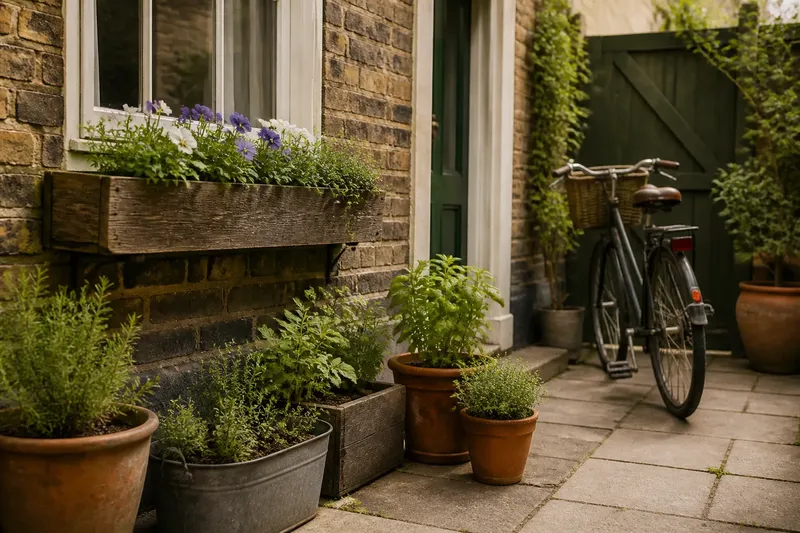
The common mistake is treating the window box before the plastic planter as a clean historical sequence: first fixed boxes, then portable pots, then plastic. That tidy story costs useful perspective. Window boxes, clay pots, metal tubs, wooden troughs and plastic planters can coexist, each suited to a different relationship between a home and its outdoor space.
Without dated records for a particular place, broad claims about when one material became common are easy to overstate. A more grounded way to understand the change is to look at what each container does: attach planting to a building, or let someone move it around.
What does the window box before the plastic planter tell us?
A fixed wooden trough beneath a sash window or a masonry ledge for pots makes planting part of a façade. The container belongs visually to the building, much like a shutter or drainpipe. Its position is settled, and its appearance matters from indoors as well as from the street.
Such arrangements can bring flowers or herbs to an upper floor with little ground space. They can also make a cared-for entrance or window more noticeable. These are practical and visual effects, not proof that every earlier home used the same materials or arrangement.
How does a fixed box differ from a portable planter?
A fixed box stays with its window or wall. A freestanding pot can be gathered beside a doorway, shifted away from a chair or taken along when a resident moves. That difference changes how a small patio, landing or balcony can be arranged.
Portability can matter in rented homes and shared spaces, where a built-in box may belong to the property. A pot can belong to the person tending it, though the space’s rules and safe placement still matter. The useful comparison is not old against new; it is attachment against flexibility.
Say a tenant has a narrow paved courtyard, a fixed window box left by a previous occupant, and a bicycle that needs a clear route to the gate. The tenant puts two movable pots of herbs near the kitchen door and shifts them against the wall before wheeling the bicycle through. The observable result is a usable route and greenery that can be repositioned, not more ground to grow in.
What do clay, wood and metal contribute?
Terracotta brings a familiar clay surface and a substantial feel. Its weight can help a pot sit firmly, but it can make a filled container awkward to move. A wooden trough can be cut or repaired with ordinary woodworking tools, while a built-in masonry ledge is a more permanent part of the structure.
Metal tubs offer another practical form, and a household vessel may be reused as a planter if it is suitable for that purpose. These materials have different appearances and handling demands. Their presence alone does not establish a particular date or a universal history.
Older containers may weather, stain or need repair. That visible wear can give a space a settled look, but it is not a virtue if a container is unstable or unsuitable for its placement. Keep the choice tied to condition and use, rather than trying to make every pot look like an exhibit.
What did plastic change—and what did it not?
Plastic planters offer low weight and repeatable shapes, which can make moving and grouping containers easier. They can be bought as separate household items rather than commissioned as building work. Those qualities help explain their appeal without requiring a claim about when they became common or what they replaced.
Plastic did not erase older materials. A plastic pot can sit inside a decorative outer container, while a fixed wooden box or clay pot remains in use elsewhere. A mixed collection is often a more honest reflection of changing household needs than a row assembled to suggest one perfect historical period.
Which container fits your outdoor space?
- Check whether the container must attach to a window or railing; if a secure, suitable fixing point exists and building rules allow it, consider a fixed box, but if not, choose a stable freestanding container.
- Check whether the area needs a clear route for a door, bicycle or chairs; if a fixed box would obstruct that route, use movable pots and shift them aside, but if the route remains clear, a fixed box may suit.
- Check whether you will need to carry the container after it is filled; if frequent moving is expected, choose a lighter container or keep the pot smaller, but if it will stay in one place, heavier clay may be manageable.
- Check the container for cracks, loose joints or unstable placement; if it is damaged or wobbles, repair it or replace it before planting, but if it is sound and sits securely, keep using it.
- Check whether the material’s appearance suits the building and the other containers nearby; if a uniform look matters, choose a matching set, but if the space already mixes materials, let the new planter differ.
- Check whether a reused metal vessel is suitable for planting and has no sharp or unsafe edges; if its condition or intended use is unclear, choose a purpose-made planter, but if it is sound and appropriate, reuse it.
What questions come up about window boxes and planters?
Does a window box have to be attached?
No. The term can describe a long, narrow container that is fixed to a building or placed securely on a ledge. For any attachment, follow the manufacturer’s directions and relevant building rules; ask a qualified professional if the fixing or structure is uncertain.
Why choose terracotta over plastic?
Terracotta offers a clay surface and a weighty presence that can suit a step or patio. Plastic is lighter and easier to move, so the better choice depends on whether appearance or handling matters more in that spot.
Can older containers still work outdoors?
Yes, if they are sound, stable and suitable for their placement. Check wooden joints, clay for cracks, and metal for sharp edges or deterioration before using an older vessel.
Is a fixed box better than movable pots?
Neither is better in every space. A fixed box makes planting part of the architecture; movable pots give the resident more control over the layout.
What is not worth the effort?
It is rarely useful to make every container match one historical period or material. A fixed box can stay with a building while a plastic pot moves with its owner, and neither needs to pretend the other never existed. For the window box before the plastic planter, the practical lesson is modest: choose a container for its attachment, weight, condition and place, not for a simplified timeline.