The Blanket-on-the-Ground Picnic Myth
A picnic does not need a scenic setting or elaborate spread. Plan around comfortable seating, easy serving, and cleanup to make an ordinary meal outdoors work.
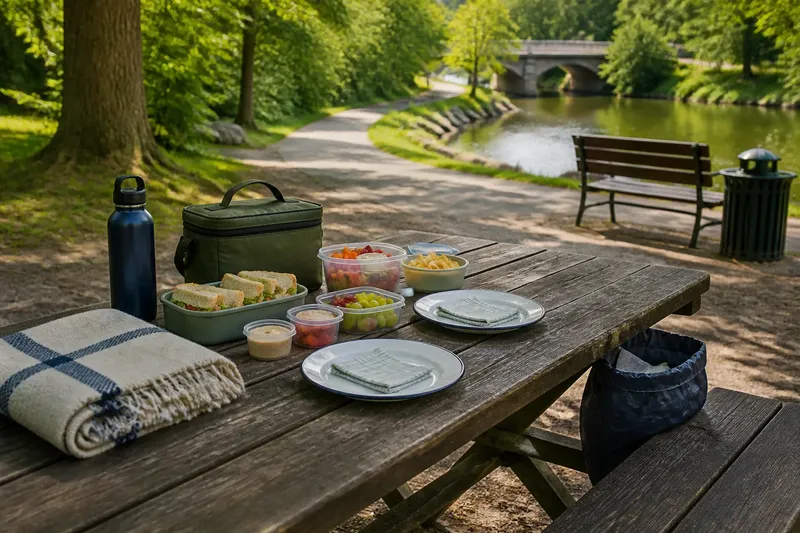
The common picnic mistake is treating the blanket as the plan: find a pretty patch of ground, bring an elaborate spread, and assume comfort will follow. The cost is often a meal spent balancing containers, brushing off crumbs, and wondering why a scenic view came with nowhere decent to sit. A picnic works better when you plan for the people, the food, and the cleanup before you decide whether the location deserves a photograph.
For a simple outdoor meal, the ground is optional. A park bench, a picnic table, a courtyard chair, or a sturdy step can all do the job. The useful question is not whether the setting looks like a picnic, but whether you can eat there without making the meal harder than it needs to be.
What should a picnic plan solve first?
Start with the conditions that affect eating: where people will sit, where food can rest, how it will be served, and how leftovers and rubbish will leave with you. These choices matter more than a coordinated basket or a distant view. A modest meal that stays easy to reach is usually a better outdoor meal than an ambitious one arranged around the scenery.
Choose the eating surface before choosing the menu. A table gives you room for plates and containers; a bench may offer seats but no useful place for food; open ground may have space but little support for anyone who finds sitting low uncomfortable. Think about the group, too. A small child, an older relative, or a person who prefers not to sit on the ground may change the sensible choice of spot.
If the available seating is uncertain, keep the meal easy to hold. Sandwiches, wraps, fruit that can be eaten by hand, and a few durable snacks ask less of a lap than bowls of loose salad or food that needs cutting. This is not a rule against proper plates. It is a reminder that serving equipment should fit the place you have, not the place you imagined.
How can you choose a spot without chasing scenery?
Look for practical features you can check on arrival: a reasonably level surface, a clear route in and out, shade or sun suited to the group, and enough space to sit without blocking a path. Notice nearby bins, restrooms, water access, and signs that explain how the area is meant to be used. A handsome patch beside a busy route may be less pleasant than a plain table a short walk away.
Make the location a flexible part of the plan, not its entire point. If the best table is occupied, consider a bench, another nearby seating area, or a smaller meal that works while standing for a short time. If the ground is damp, steep, or littered with debris, there is little virtue in insisting that a blanket be deployed. Picnic tradition has survived worse disappointments.
A blanket can still earn its place when it provides a clean layer, gives children room to sit, or makes a bare bench more comfortable. Choose one that is easy to fold without trapping crumbs against your hands. If the ground is wet, a blanket alone may not solve the problem; a washable ground cloth beneath it can help, provided local rules allow it and you can pack it away cleanly.
What food and serving gear make the meal easier?
Build the menu around food that travels well and can be served with the tools you are willing to carry. A sandwich in a reusable container needs little assembly on site. A dish with separate toppings can be pleasant if you have a stable surface and serving utensil, but it becomes fussy when everyone is trying to hold a plate at once.
Use containers that close securely and are easy to open. Pack sauces separately if they could make bread or other food soggy, and bring a utensil only when the menu calls for one. A cloth napkin can handle a small spill and serve as a clean place to set a sandwich; a stack of disposable extras is not automatically more convenient.
- Choose food that can be portioned before leaving home.
- Use a sturdy container for items that could be crushed.
- Pack a small serving spoon or tongs only if the meal needs them.
- Bring drinking water in a reusable bottle suited to the outing.
- Carry a sealable bag for wrappers, food scraps, or used napkins.
For foods that need temperature control, follow the package label and the relevant food-safety guidance, and use an insulated cooler or other suitable equipment as directed. Keep raw and ready-to-eat foods separate. If you are unsure whether a dish has remained safe to eat, do not rely on smell or appearance alone; discard it and consult an appropriate food-safety authority for specific guidance.
Not worth the effort: elaborate serving boards, fragile glassware, and decorations that need their own containers. They can suit a planned gathering with a table and willing helpers. For an ordinary lunch outdoors, each object should have a job beyond looking as though it belongs in a picnic photograph.
How should the plan change over the week?
A useful picnic plan can take shape in small decisions rather than a dedicated expedition. Early in the week, choose a likely meal time and one nearby place with an alternative seating option. Check the park or site information for any rules that affect food, dogs, fires, or group use; local requirements and posted directions take precedence.
A day or two beforehand, choose the menu and check what you already have. Set aside containers, napkins, utensils, a bottle, and a bag for rubbish. Decide whether you need a blanket based on the seating and the people coming, rather than packing one by habit. If weather or access may change, identify a second nearby option that keeps the outing simple.
On the morning, prepare food that benefits from being packed ahead and leave items that should stay chilled in suitable storage until departure. Before leaving, check the forecast and the destination’s current conditions. Adjust the plan if rain, heat, wind, or a closure makes the original spot uncomfortable or unavailable. A picnic is a meal outside, not a binding agreement with one patch of grass.
At the site, take a brief look before unpacking. Confirm that the surface is usable, the group can sit comfortably, and the food can be kept out of the way of passersby. Put the rubbish bag somewhere reachable but not where it will blow away or obstruct others. Open only what you need first; there is no prize for arranging every container before anyone eats.
What should you do when the setting changes?
Imagine you have packed sandwiches, cut fruit, and a small container of dip for a park table, but the table is occupied and the nearby ground is damp. You could move to a dry bench and keep the dip closed until everyone is seated, or choose a sheltered public seating area nearby. The expected result is a meal that remains easy to serve, even though the original scenic arrangement has been abandoned.
If the food needs a flat surface, use a table or a stable ledge where permitted rather than balancing containers on knees. If one person cannot sit comfortably, choose a place with a chair or bench, or shorten the meal and eat in a more accessible spot. If there is no suitable place to unpack, keep food contained and find another location rather than spreading belongings across a path.
When the weather shifts, make a small adjustment instead of trying to preserve the original setup. Move into shade if direct sun is uncomfortable, find a sheltered seating area if wind is scattering napkins, or pack up if conditions are no longer pleasant. Secure loose rubbish as you go. For conditions that could create a safety concern, follow official local guidance and choose an indoor alternative when appropriate.
How do you leave the place ready for others?
Make cleanup part of the packing plan. Keep a bag for rubbish and a separate container for reusable items, so wrappers do not end up mixed with clean utensils. Check the eating surface and the ground around it for crumbs, napkins, bottle caps, and food scraps. Take everything away unless signs clearly direct visitors to a suitable disposal point.
Deal with leftovers before they become an afterthought. Put food back into appropriate containers, keep it at a safe temperature as directed, and discard anything that should not be kept. Shake crumbs from a blanket only where doing so will not scatter debris into planting beds or onto other visitors’ spaces. Fold it with the used side contained, then clean it at home as its care label directs.
Before leaving, check the route out and make sure no bag, bottle, or utensil remains behind. If the spot was crowded, leave room for the next group rather than extending the meal into an informal reservation. A tidy departure is part of comfortable picnic planning: it keeps the outing easy for you and leaves the place usable for someone else.
Which picnic questions come up most often?
Does a picnic need a blanket?
No. A table, bench, chair, or other suitable seating can work, and people who do not want to sit on the ground should not have to negotiate with a blanket. Bring one when it solves a specific comfort or seating problem.
What is the easiest food to bring?
Choose food that travels securely and can be eaten with little assembly, such as sandwiches, wraps, or ready-to-eat fruit. The best choice depends on the group, available seating, and any dietary needs, so keep the menu familiar and practical.
How do you keep a picnic simple?
Plan one main food, a side or snack, drinks, and the few utensils needed to serve them. Pack a rubbish bag and containers that are easy to carry home, then leave decorative extras behind unless the gathering has a clear reason for them.
What if there is no scenic place to sit?
Use a comfortable, permitted spot with enough room to eat, even if the view is ordinary. A picnic’s useful feature is that it moves a meal outdoors; the scenery is optional, and so is the blanket on the ground.
The most dependable picnic plan is the one that still works when the table is taken, the grass is damp, or the view turns out to be mostly a parking lot. Keep the meal easy to serve, choose seating that suits the group, and pack cleanup gear before you leave. For a picnic that feels comfortable rather than staged, those decisions matter more than the blanket.